
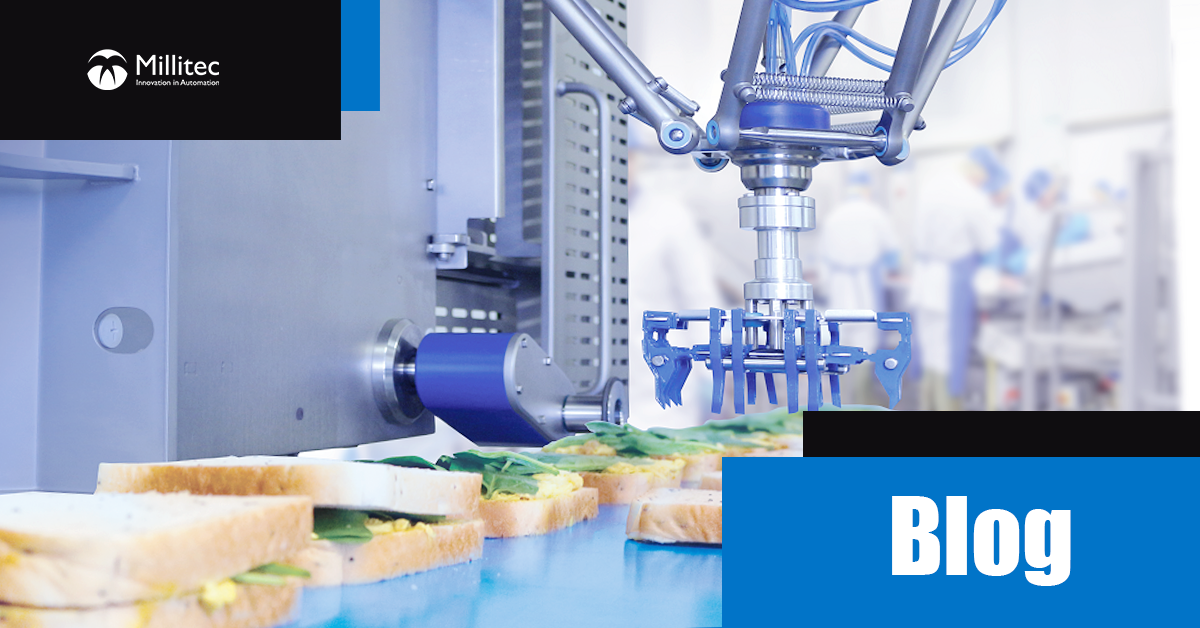
Millitec has introduced the HDR (igene) Delta Lidding Robot, and it is one of our most innovative machinery to revolutionise traditional pick-and-place operations.
In this blog post, we are introducing you to an 8-second sandwich lidding showdown, a captivating display of the speed and precision of robotic sandwich-making compared to traditional production methods.
While it was no surprise that the robot outperformed humans (after all, we programmed it for efficiency), the footage revealed unexpected benefits for future robotics.
UNCOVERING INEFFICIENCIES
Upon closer examination of the manual production line, we identified several inefficiencies that we can address to eliminate unnecessary costs:
01. INGREDIENT PLACEMENT
On the right-hand side, staff members placed ingredients with an additional person required to balance ingredient distribution.
02. OVERHANGING FILLING
A portion of the filling overhung the base, necessitating manual adjustments by the Lidder and increasing process time.
03. SANDWICH "PRESS"
Extra effort was expended to ensure the lid was securely positioned on the sandwich.
04. CONVEYOR WASTE
Ingredients left on the conveyor belt would be discarded, adding to production costs.
ROBOTIC SOLUTIONS
So, how can robotics and automation help streamline these inefficient processes?
01. INGREDIENT PLACEMENT ENHANCEMENT

We are developing an ingredient placement delta robot equipped with a brilliant machine vision system and advanced software programming. This robot can accurately place the right amount of ingredients in the precise position, even on a moving production line, eliminating both challenges #1 and #2 mentioned earlier.
02. SANDWICH "PRESS" IMPROVEMENT
Robotic footage reveals that accurate lid placement on the sandwich base eliminates the need for manual pressing. Further alignment checks and compression are handled in the next phase of the process, such as ultrasonic cutting. Some ultrasonic cutters, like those designed by Millitec, feature high-speed aligners to ensure precise sandwich positioning, guaranteeing a perfect result.
03. WASTE REDUCTION
Minimising waste is essential, particularly in food production. An accurately programmed robot with a well-designed end effector can significantly reduce the chance of ingredients dropping on the conveyor belt, optimising ingredient usage.
CHALLENGES & FUTURE DIRECTIONS
Although robotics can potentially revolutionise food production, we must address several challenges. Designers must devise methods to efficiently extract all usable ingredients from their containers, teach robots to identify various components accurately, create versatile end effectors adaptable to different ingredients, and maintain cost-effectiveness.
In conclusion, the robotic sandwich lidding showdown is a compelling example of how automation can reshape food production, improving efficiency and reducing costs while ensuring consistent quality. The future holds exciting possibilities for integrating robotics into various facets of the food industry.




Comments are closed for this post.